

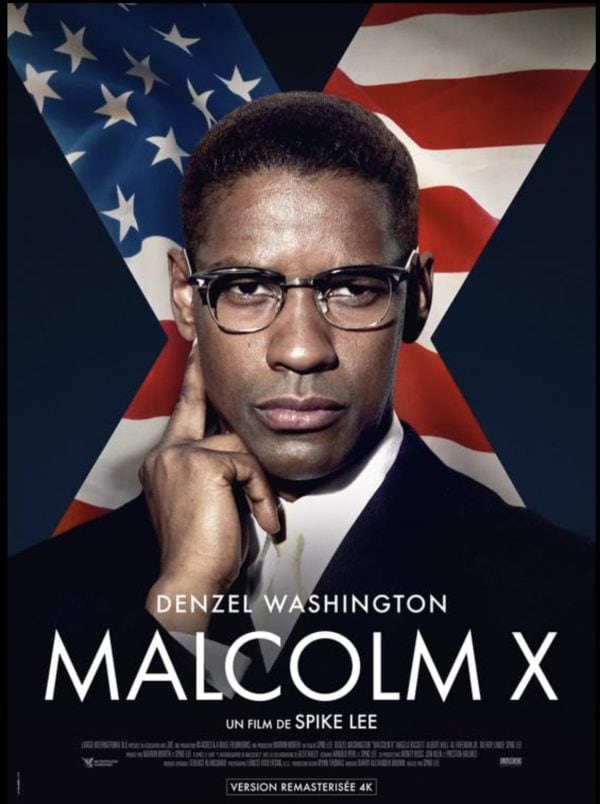
Thirty three years ago, Spike Lee released one of the most important films in American cinema, the epic biographical drama X. Debuting in theaters on November 18, 1992, the film brought the life, rise, struggle, and transformation of Malcolm X to the big screen in a way the world had never seen before.
Starring Denzel Washington in what is widely considered one of the greatest performances of his career, X delivered a bold, unfiltered portrayal of a man who challenged the conscience of America. The film followed Malcolm from his childhood and street years to his prison awakening, his rise within the Nation of Islam, his break from the organization, and finally his evolution into an international human rights figure.
Spike Lee’s direction captured the magnitude of Malcolm’s journey with unapologetic honesty and cinematic force. The film balanced historical accuracy with emotional depth, revealing Malcolm as a man who grew, questioned, learned, and ultimately sacrificed everything for his people. It pushed audiences to confront uncomfortable truths about racism, identity, power, and redemption in the United States.
Denzel Washington’s performance remains the soul of the film. His commitment to the role transformed him into Malcolm with a level of precision and passion that earned him universal acclaim. Many still argue that his portrayal should have secured him the Academy Award that year. Angela Bassett also delivered a powerful performance as Dr Betty Shabazz, grounding the story with grace and strength.
Upon release, X was not just a movie, it was a cultural moment. Black audiences packed theaters wearing Malcolm’s signature glasses and X apparel, treating the film as both art and ancestral tribute. Schools took students to see it. Community groups held discussions. The film became part of the national conversation.
More than three decades later, X remains a cinematic masterpiece and one of Spike Lee’s most important works. It introduced a new generation to the life and philosophy of Malcolm X and ensured that his legacy would not be reduced to a single chapter or a single speech.
Today, the film stands as a reminder of Malcolm’s enduring influence and of Spike Lee’s fearless dedication to telling the stories that matter. X is more than a film. It is a monument. It is a lesson. It is history preserved through images, words, and truth.