
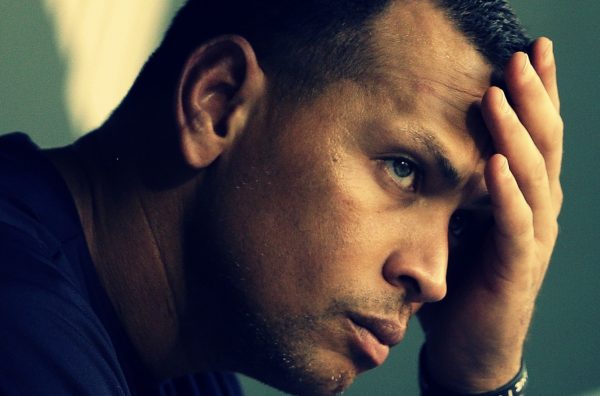
Former MLB superstar Alex Rodriguez is opening up like never before in the new HBO docuseries Alex vs. A-Rod, a three-part exploration of his rise, fall, and ongoing battle for redemption both on and off the field. But despite the self-reflection and honesty on display, the 14-time All-Star insists the project is not a campaign to secure his long-denied place in Cooperstown.
During a recent appearance on NBC’s TODAY, Rodriguez addressed whether the series might sway Baseball Hall of Fame voters who have largely dismissed his candidacy due to his 2014 suspension for performance-enhancing drug use. “That’s totally fair. I would go the other way,” he said. “Now that you saw the docuseries, I’m definitely not going in the Hall of Fame. I knew the rules, I broke the rules, and if that’s the penalty, that’s completely on me.”
The documentary retraces Rodriguez’s path from teenage prodigy with the Seattle Mariners to record-breaking free agent with the Texas Rangers, culminating in his World Series championship with the New York Yankees in 2009. With 696 home runs, fifth-most in MLB history, and three American League MVP awards, his numbers easily rival the sport’s greatest legends. Yet, as the film and Rodriguez himself acknowledge, statistical dominance doesn’t erase the shadow of his steroid scandal.
When asked directly if he believes he deserves enshrinement in the Hall, Rodriguez didn’t hesitate. “Of course, of course,” he said, before pointing to other all-time greats similarly barred from baseball’s highest honor. “I mean Barry (Bonds), Roger (Clemens)… it’s laughable that Roger Clemens, the greatest pitcher of all time, and Barry Bonds, head and shoulders above everybody, including Shohei Ohtani—you name it—Barry Bonds is by far the GOAT. He’s our Michael Jordan. Of course he deserves to be there.”
Still, Rodriguez made it clear that revisiting his career through the lens of Alex vs. A-Rod was not about rewriting history. “That’s not the point of this,” he explained. “The last thing I was thinking about was the Hall of Fame.”
The series also peels back the layers of Rodriguez’s complicated persona. He reflects on how fame at 18 distorted his self-image, saying, “I think over time I kind of started losing my way a little bit, and then I felt like A-Rod took over.” Calling himself a “recovering narcissist,” Rodriguez revealed he has spent more than a decade in therapy. “It’s really saved my life,” he said.
Alex vs. A-Rod ultimately captures a man reconciling with his past rather than campaigning for his legacy. Whether Cooperstown ever opens its doors remains uncertain, but for Rodriguez, accountability may now matter more than acclaim.